Saturday 3 October 2026 · 2pm · 30 minutes
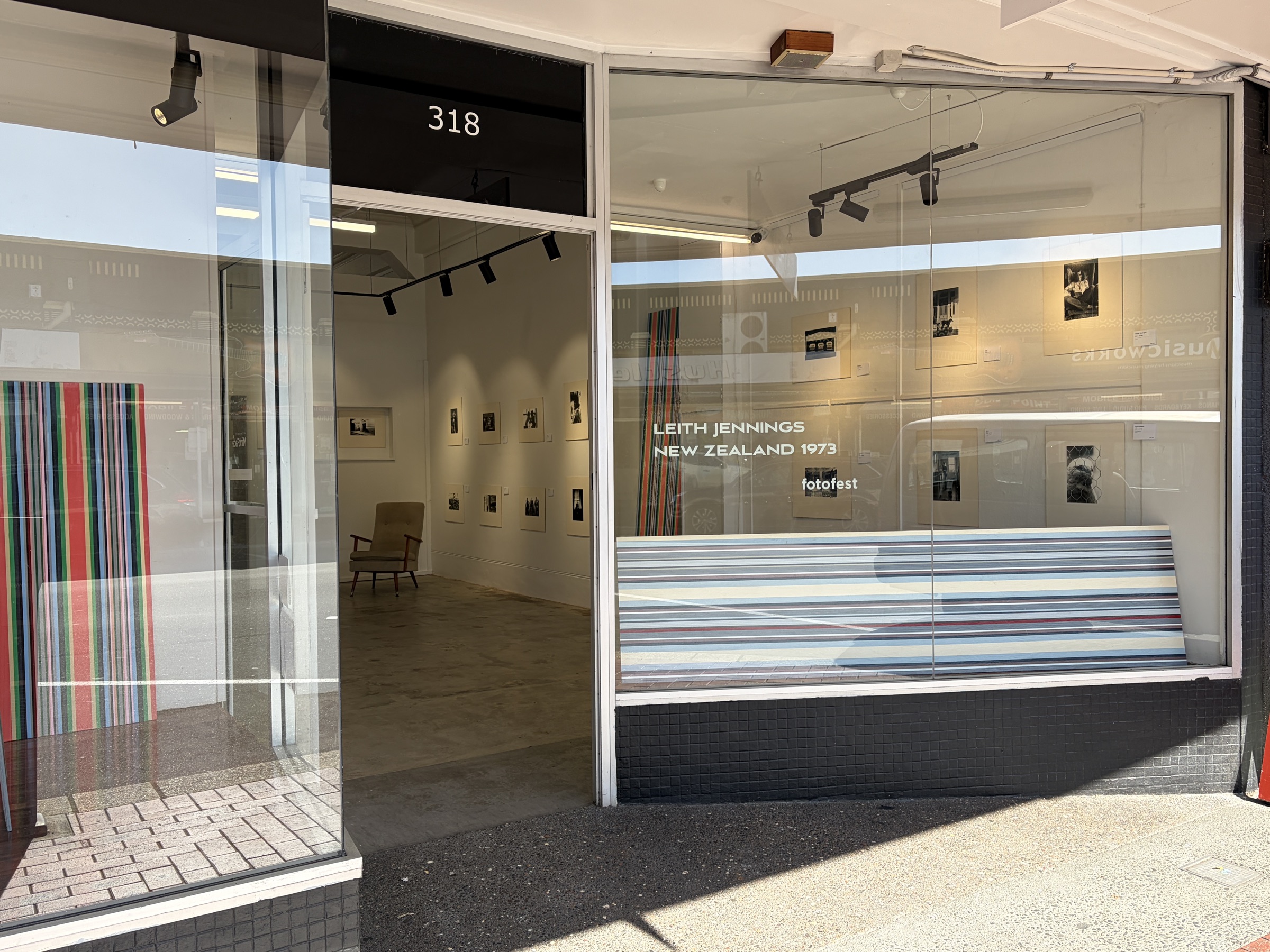
The Line, 318 Heretaunga Street West, Hastings
Free walk-in · Part of Fotofest
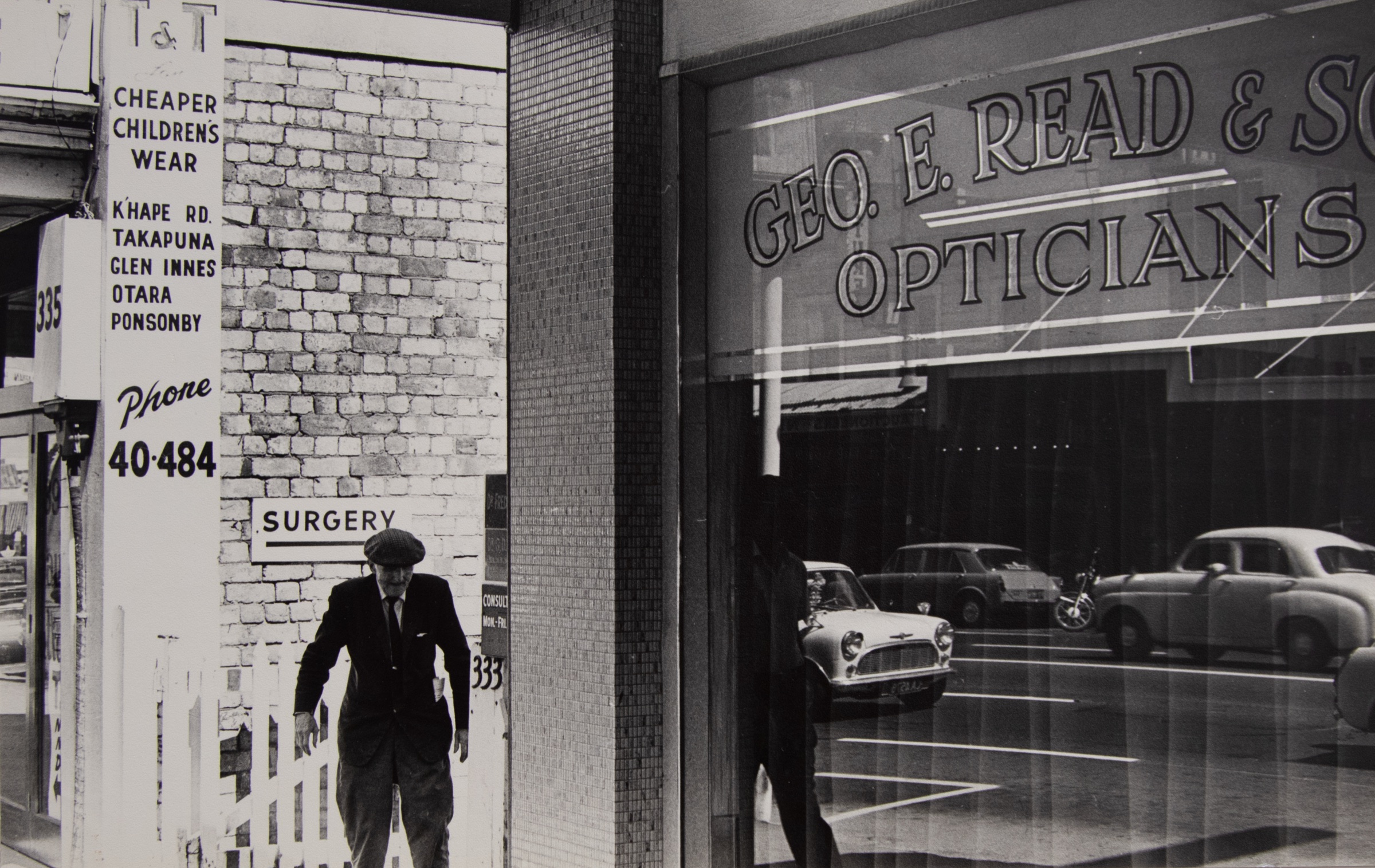
A short informal chat with MintFace on why most digital photographic archives are quietly disappearing, and what a genuinely durable alternative looks like. The case study is the Leith Jennings collection — a body of 1973 documentary photographs currently being minted for conservation as part of The Line's Fotofest exhibition.
The problem
Photographers are producing more work than at any point in the medium's history, and losing it faster than at any point in the medium's history. Three assumptions quietly govern how the work is stored, and each of them is wrong.
The hard drive on the shelf. Consumer hard drives have a real-world average lifespan of three to five years. Studies of failed drives find the median failure point at around one year. Drives sitting powered off in cold storage degrade too — magnetic properties don't hold indefinitely, and the mechanical components weren't designed to sit still for decades. The drive in the drawer is not a solution. It is a slow-motion loss.
The SD card in the camera bag. Consumer SD cards use TLC flash memory rated for as few as 1,500 write cycles per cell. Cards develop silent bit-rot long before they announce themselves as broken. Photographers routinely find shoots from five years ago partially unreadable and have no idea when the corruption began.
The Wayback Machine. The Internet Archive is doing extraordinary work, but it is one non-profit, storing a partial snapshot of the public web at intervals it chooses, with no legal guarantee of continuity. Twenty years from now, the specific images a photographer relied on being archived may or may not still be reachable, and there is no mechanism to check until you go looking.
None of this is negligence. It is the storage substrate itself, quietly setting the terms.
What blockchain offers, and what it doesn't
Blockchain-based archival isn't magic. It is a different set of trade-offs.
What it offers: cryptographic verifiability that a specific image existed at a specific date, decentralised replication across thousands of nodes (no single point of failure), publicly readable metadata that outlasts individual institutions, and immutable provenance from the moment of the mint forward.
What it doesn't offer: it doesn't store the pixels on-chain — image data typically lives on IPFS or Arweave, which have their own durability characteristics. It doesn't obviate physical archives — the Leith Jennings originals are still prints in the family's care, and should be. It doesn't guarantee interpretability in a century — file formats evolve.
What it does do is remove the archival substrate from any single institution's control. If the gallery closes, the mint remains. If the family stops paying storage fees, the record is still on-chain. If the domain lapses, the token persists. For a body of work whose value is not commercial but historical, that changes the arithmetic considerably.
The Leith Jennings case study
Leith Jennings' 1973 documentary series is a small body of work that captures a specific New Zealand moment. The originals are prints, held by the family — cared for, but in one place, on one wall. Mint on blockchain is not a replacement for that; it's a second location.
The Line is signing the mints institutionally, not commercially. There is no sale, no edition. The mint is the archival gesture. Whoever holds the private keys to the Line's institutional wallet in fifty years will have inherited the responsibility of stewarding those tokens, and whoever queries the blockchain in fifty years will find the record intact.
There is a familial link — Leith Jennings was the father of the gallery's founder, Ryan Jennings — and it would be false to obscure it. The mint is an inheritance in more than one sense.
What we'll cover in the 30 minutes
- Why the assumptions above are wrong, with real failure-rate data
- How on-chain metadata differs from EXIF, and why it matters for archival practice
- The mechanics of an archival mint — costs, storage, key management, succession planning
- How photographers can start thinking about their own archives, whether or not they mint anything
- Q&A
The session is deliberately short. Thirty minutes is enough to introduce the problem and the mechanics; the long conversation happens over coffee afterwards. Bring questions.
Who this is for
Photographers of any generation who have thought about what happens to their work when they aren't around to maintain it. Historians and archivists interested in what distributed archival infrastructure actually looks like in practice. Anyone with a hard drive in a drawer they haven't checked in five years.
No blockchain background required. The session assumes none.
With MintFace. Free walk-in, no RSVP required. The Line, 318 Heretaunga Street West, Hastings. Part of Fotofest 2026. The Leith Jennings collection is on display at The Line throughout the festival, alongside MintFace's Geodetic Moments.